Disruption of the molecular networks that maintain protein homeostasis (proteostasis) is a key hallmark of ageing. This leads to the accumulation of unstable proteins in insoluble aggregate deposits in aged tissues. Our research focuses on discovering mechanisms to prevent protein aggregation, with the goal of promoting healthy ageing and alleviating age-related diseases such as Alzheimer’s. We aim to uncover why certain cell types, such as neurons, are particularly vulnerable to aggregation and how their resilience can be enhanced through genetic or biochemical interventions. Another major area of interest in the lab is the identification of human proteins with extracellular chaperone activity, which prevent the aggregation of extracellular proteins such as amyloid-β and support microglia clearance of protein aggregates. Our lab works mainly with C. elegans and in vitro models, using state of the art microscopy, genetic screens, proteomic studies and functional decline assays.
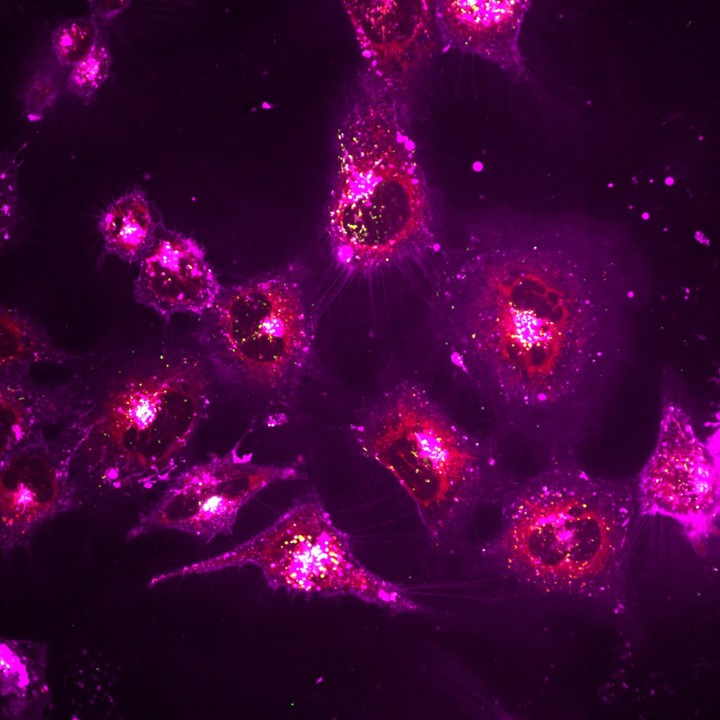
Microglia clearance of Abeta oligomers
HMC3 microglia stained with Cell mask (pink), lysotracker (red) and hilyte488Aβ (green)