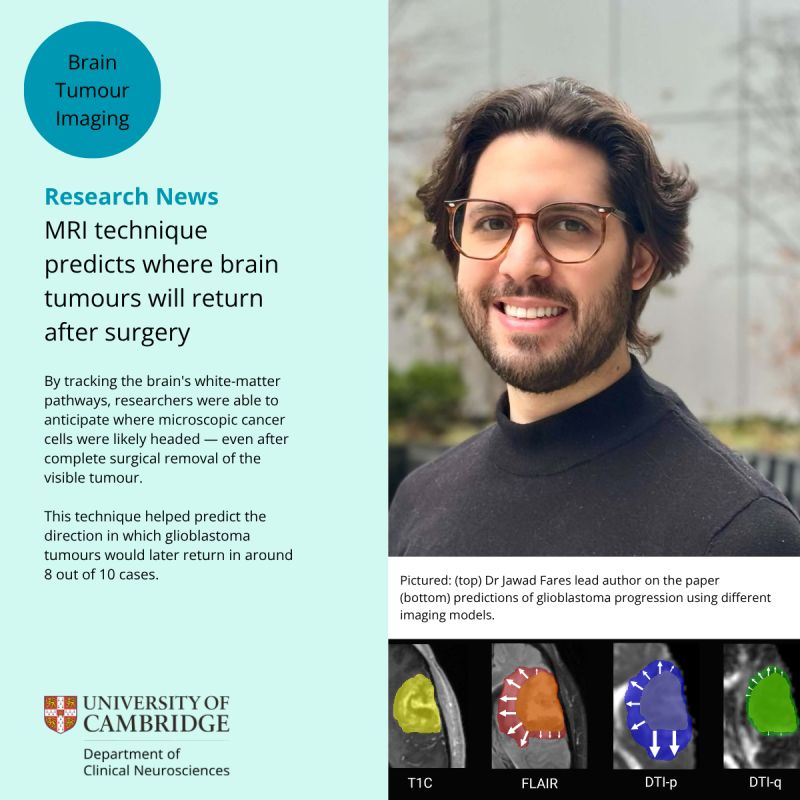
Research team from the Department of Clinical Neurosciences has succeeded in finding a technique to help predict where glioblastoma may return after surgery. Researchers found that by using a type of scanning technique called DTI-q they could correctly forecast the direction of the cancer’s return in around 8 out of 10 cases. Their study included 29 patients with glioblastoma in the frontal lobe of the brain.
The study was led by Jawad Fares who said:
“Even when the visible tumour has been completely removed, glioblastoma can return because microscopic disease remains beyond what standard MRI can show. Our study suggests that diffusion imaging may help reveal the direction of this hidden spread before surgery, giving surgeons a more biologically informed map for planning treatment.”
The researchers stress that prospective studies are now needed before this approach could be used to directly guide surgical decisions.
Read their paper here.
Adapted from the Department of Clinical Neuroscience Research News.
Posted on 20/10/2026