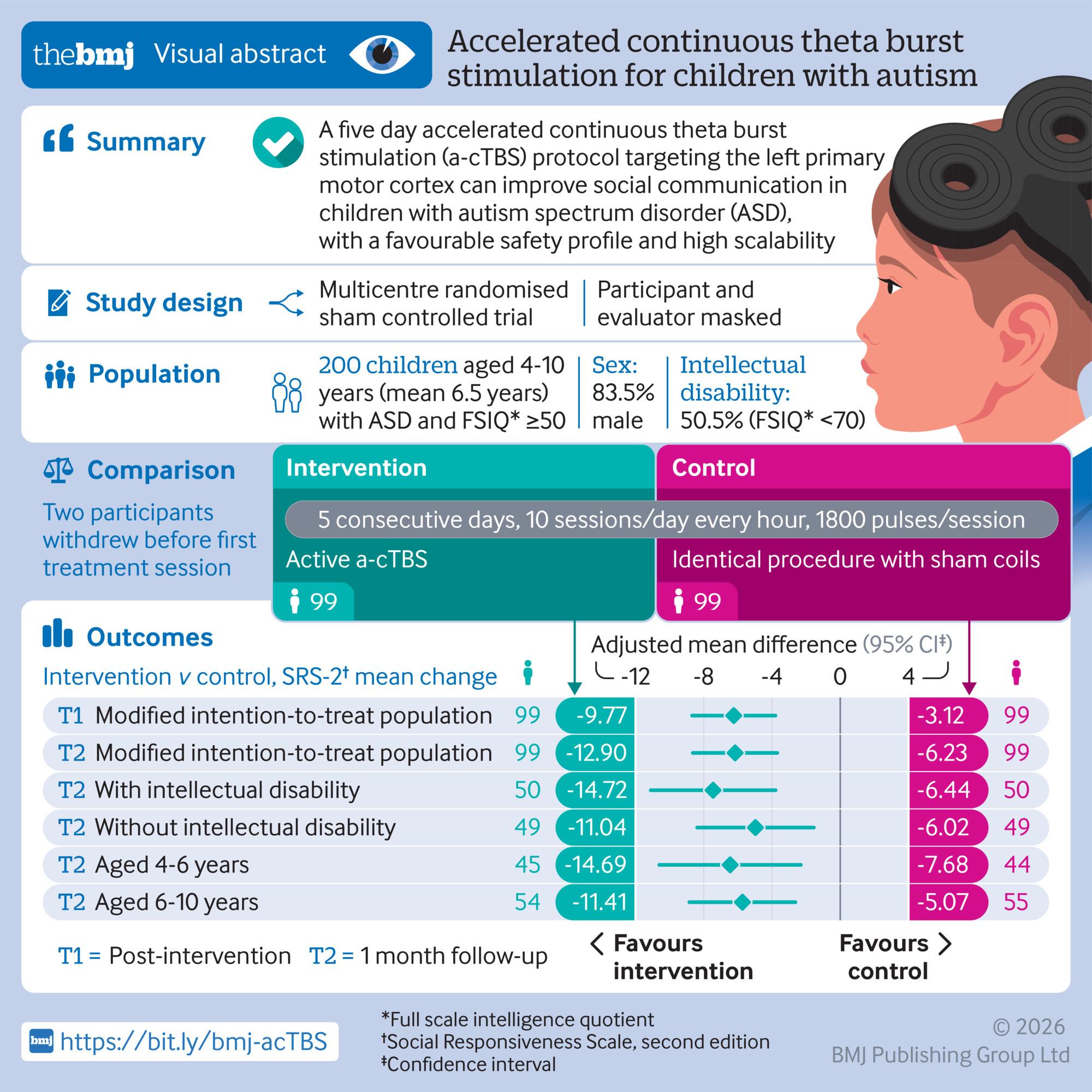
A five day a-cTBS protocol targeting the left primary motor cortex significantly improved social communication in children with autism spectrum disorder and showed a favourable safety profile. These findings support a-cTBS as a viable and scalable therapeutic option for children with autism spectrum disorder.
The protocol development was led by Prof Fei Li and provides a feasible, effective, and scalable therapeutic option for children with ASD, including those with intellectual disability. By addressing key limitations of conventional rTMS, this protocol represents a major advancement towards equitable autism care worldwide.
Reference: https://doi.org/10.1136/bmj-2025-086295
Social communication impairment, a core symptom of autism spectrum disorder, lacks effective treatments
Non-invasive neurostimulation techniques have shown potential in modulating neural network plasticity and improving symptoms of autism spectrum disorder, but existing evidence remains limited and inconclusive
Preliminary results from a previous open label pilot study suggested that a new accelerated continuous theta burst stimulation (a-cTBS) protocol targeting the left primary motor cortex is feasible, safe, and potentially effective in enhancing social communication in children with autism spectrum disorder
This randomised, sham controlled trial showed that a five day a-cTBS protocol targeting the left primary motor cortex significantly improves social communication in children with autism spectrum disorder
The protocol’s operational simplicity, combined with consistent treatment effects across diverse subgroups, underscores its potential for broader clinical implementation
Adverse effects were mild to moderate and all resolved spontaneously without the need for intervention, supporting the safety and tolerability of the intervention
Posted on 05/05/2026